

This post may contain affiliate links. Please read our disclosure policy.
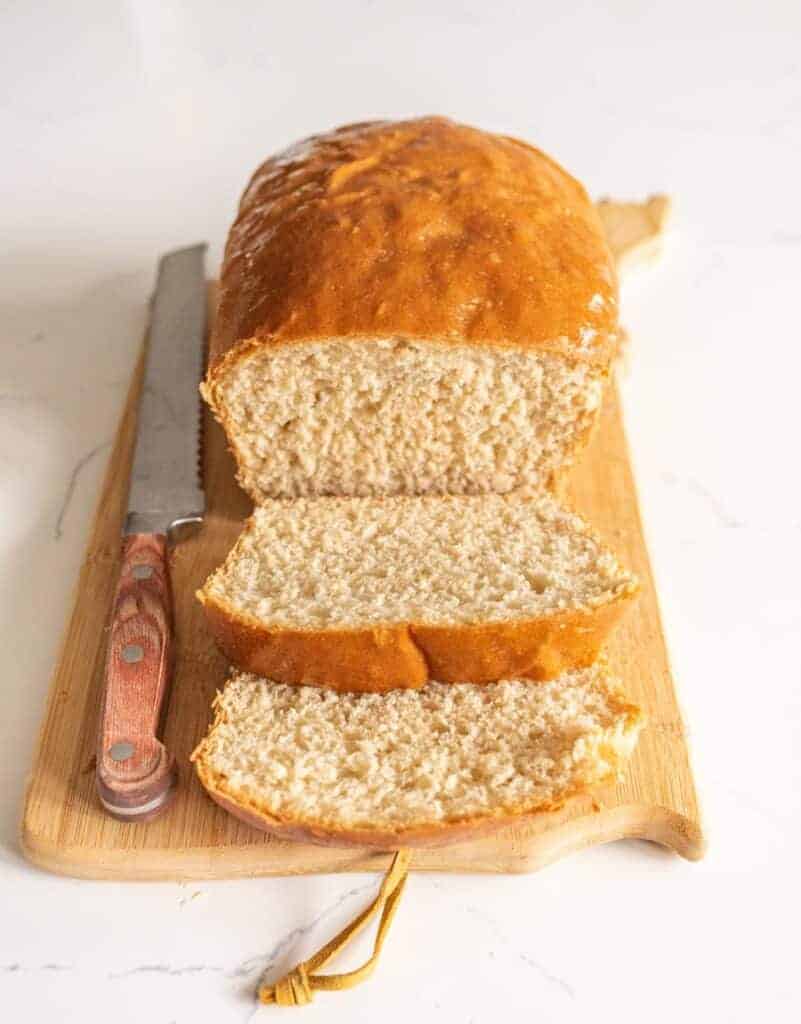
We’ve all had those days where the pantry looks a little bare, but the family is craving something warm and comforting to go with dinner. This crusty bread recipe is the perfect option when you need a reliable, crusty loaf without the fuss. Learn how to make delicious homemade bread without eggs, milk, or butter!
This easy homemade recipe uses simple pantry ingredients to create two perfect loaves with a soft texture and golden crust. I’ve made this recipe countless times, and it is consistently the easiest way to get fresh, soft bread on the table with pantry staples. Even if you’re “not a baker” or stay away from bread recipes at all costs (because let’s be honest, we’ve all messed up bread at some point or another, or have heard horror stories of loved ones ending up with dense, brick-like loaves), you can handle this. Pinky promise.
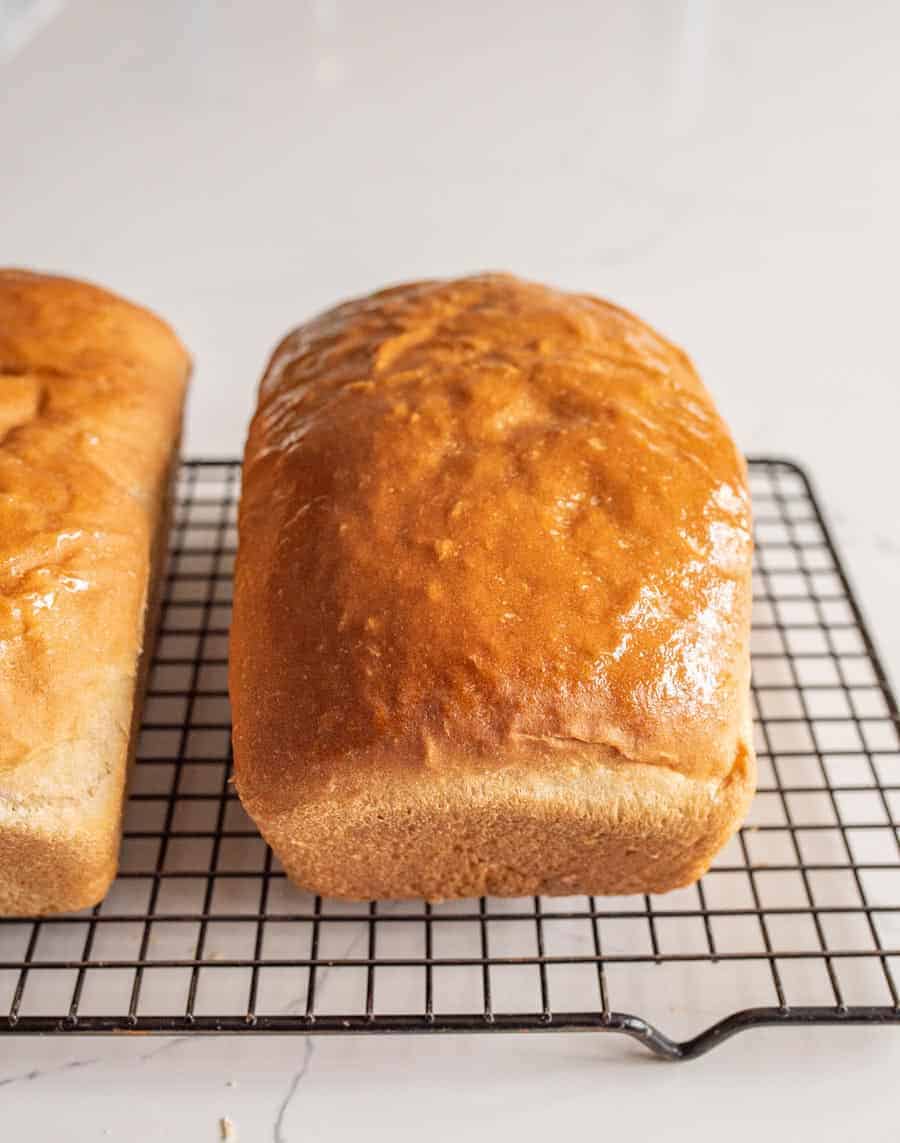
Table of Contents
- What is Homemade Bread with No Eggs, Milk, or Butter?
- Key Takeaways
- Ingredient Notes
- How to Make Bread Without Eggs
- Step 3: First rise
- Notes for Making Bread Without Eggs, Milk or Butter
- Pro Tips for Making Amazing Homemade Bread
- How to Make Homemade Bread (with no eggs, milk, or butter) Recipe
- Substitutions and Variations
- Frequently Asked Questions
- What to Serve with Homemade Bread
- Storage and Reheating
- More Yeast Bread Recipes to Consider
What is Homemade Bread with No Eggs, Milk, or Butter?
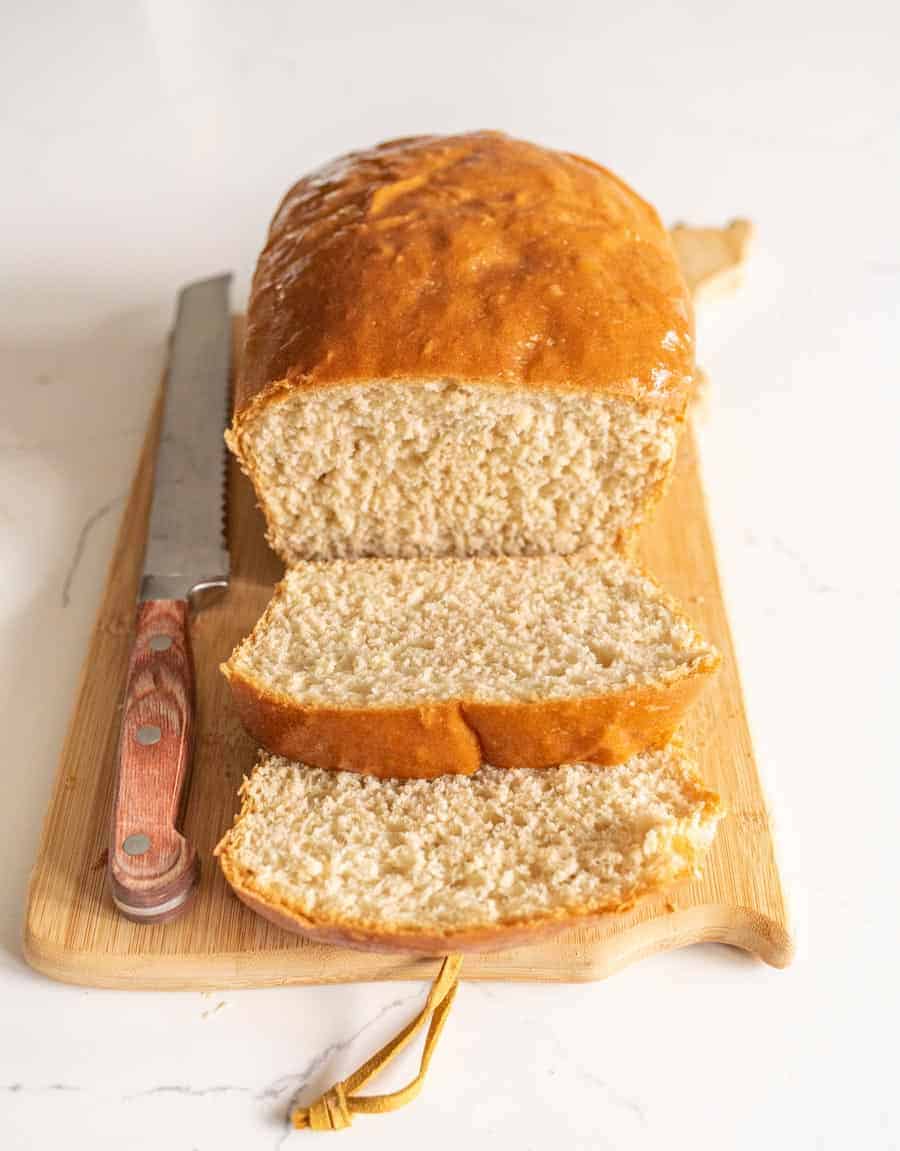
This homemade bread is a simple, yeast-leavened loaf made using only water, flour, yeast, salt, and a touch of sweetener and oil. It is a vegan and dairy-free alternative to traditional enriched breads. It is loved for its soft interior, golden crust, and easy preparation without a stand mixer.
Key Takeaways
- Made with pantry staple ingredients.
- 100% vegan-friendly and perfect for those with allergies, made without dairy or eggs.
- This dough can easily be kneaded by hand, no stand mixer needed.
- Costs significantly less than store-bought loaves, making it budget-friendly.
- Perfect for sandwiches, stews, and toast!
- Beginner-friendly, easy to make when new to baking bread.
Ingredient Notes
- Warm Water – Activates the yeast and holds the dough together. This should be warm to the touch but not boiling.
- Yeast – This provides the lift and allows the dough to rise.
- Honey – The sweetener feeds the yeast and adds a hint of sweetness to the crumb.
- Oil – Oil will help the crust firm up and also keep the dough from being super sticky. It also replaces the fat in the dough and allows the bread to stay soft.
- Salt – A necessity with any bread making. Salt controls the yeast growth and enhances the flavor.
- Flour – Flour is what brings the dough together; you can use all-purpose, bread, or whole wheat flour. Flour provides the structure to hold the bread together.
See recipe card below for full information on ingredients and quantities
How to Make Bread Without Eggs
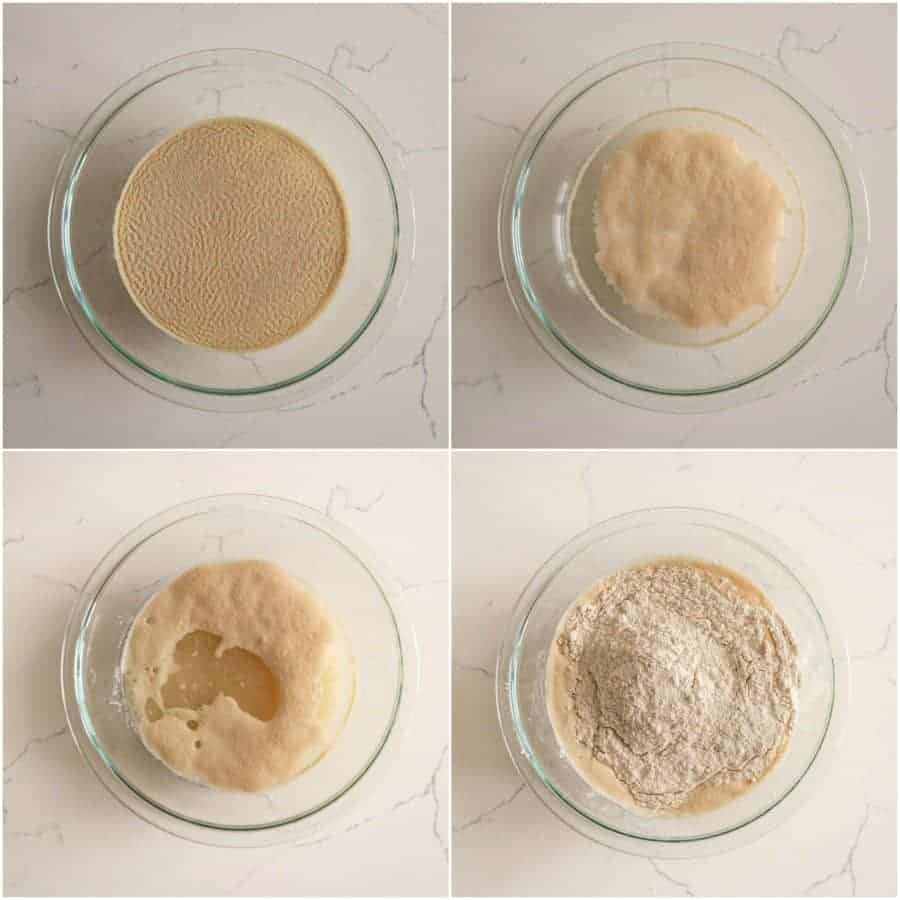
Step 1: Mix the wet ingredients and begin the dough
Combine warm water, instant yeast, honey, oil, and salt in a large bowl. Add 2 cups of flour (use whole wheat here if you’re doing a blend) and stir vigorously for one minute to create a thin batter.
Step 2: Form the dough
Gradually stir in additional white flour, one cup at a time, until a smooth dough begins to form. When it becomes difficult to stir, turn it out onto a well-floured surface and knead for 6-8 minutes until the dough is soft, elastic, and no longer sticky.
Step 3: First rise
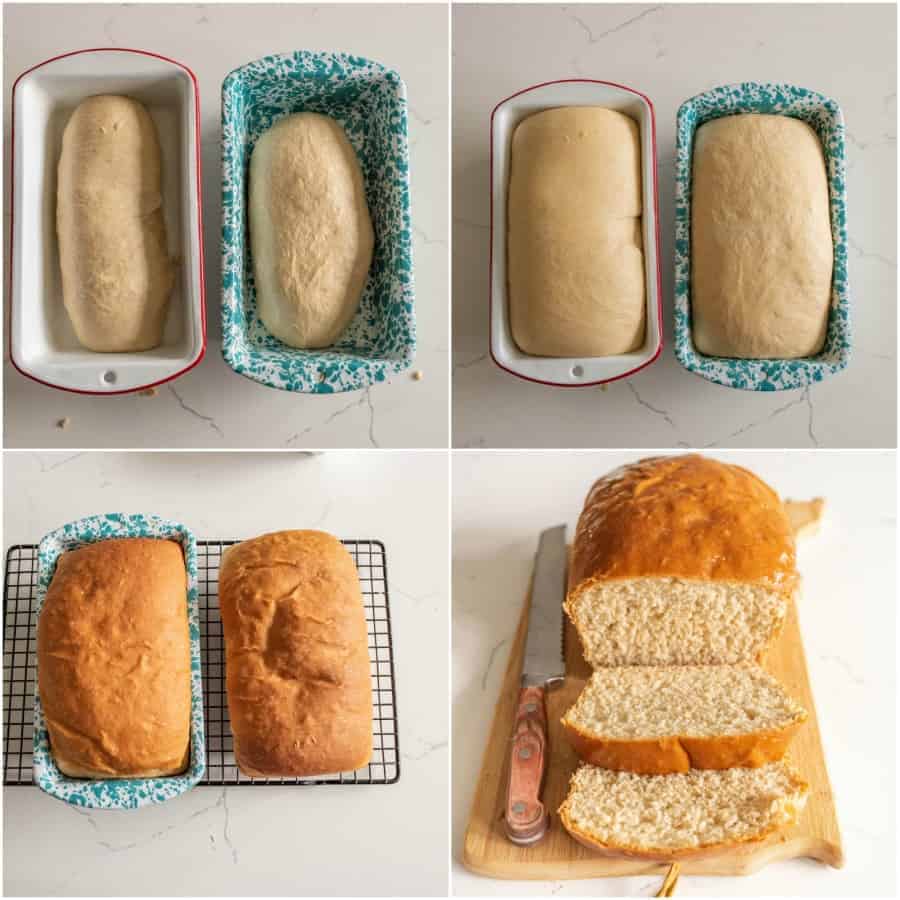
Place the dough in your bowl, cover with a heavy towel or plastic wrap, and let it rise in a warm spot until doubled in size—about 30 minutes.
Step 4: Shape and second rise
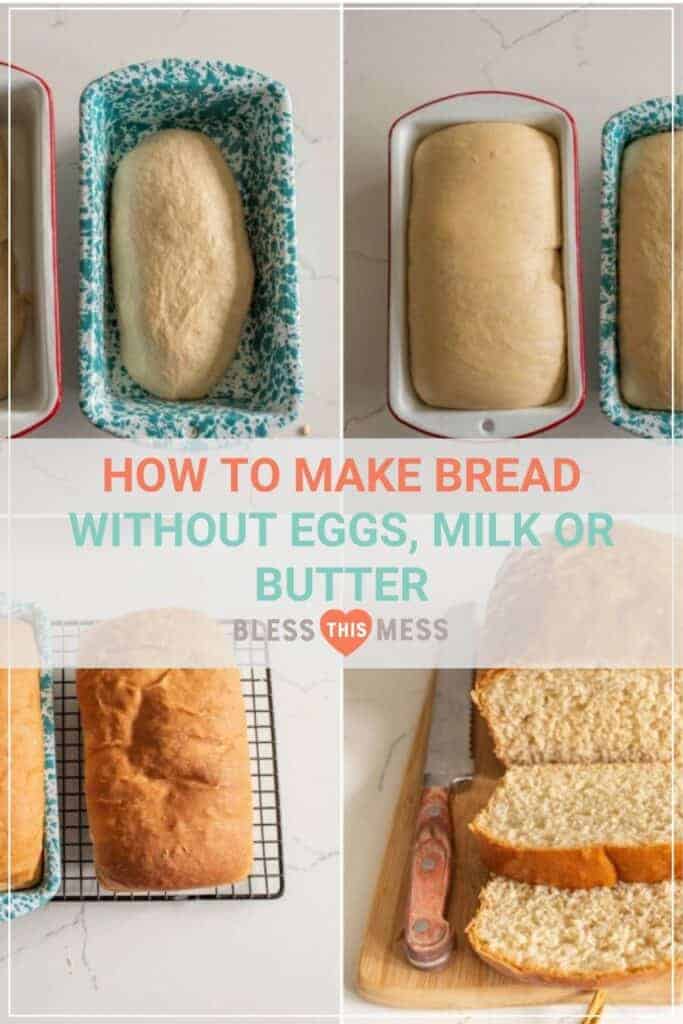
Punch down the dough, divide it into two equal pieces, and shape each into a loaf. Place in two greased loaf pans and let rise until the dough reaches about one inch above the rim of the pan (or to the top if using larger 9×5-inch pans).
Step 5: Bake
Bake at 350°F for 35 minutes until the crust is golden brown and the bread sounds hollow when tapped.
Step 6: Cool and serve
Remove from the oven, turn the loaves out onto wire racks immediately, and rub butter (or vegan butter) over the tops while hot. Let cool slightly before slicing and enjoying.
Notes for Making Bread Without Eggs, Milk or Butter
Oil Choices – The type of oil you use is flexible — use canola, vegetable, avocado oil, or even melted butter.
Flour Flexibility – You can use all bread flour, all all-purpose flour, and even all whole wheat flour. My personal preference is a 50/50 split between white flour and whole wheat flour or even a 2:3 ratio (2 cups whole wheat flour with about 3 cups white flour).
Yeast Tip – I use instant yeast. If you are using active dry yeast (or any kind of dry yeast other than instant), just let the yeast rest with the water and honey in the bowl for 5 minutes. If it starts to get foamy on the top of the bowl, you know that the yeast is good to use and that it is now ready for you to move forward with the recipe.
Bread Pan – The size/type of bread pan doesn’t matter much. A smaller pan will yield a loaf that is more domed on top; a large pan will make a loaf that is wider and flatter. Use what you have; they’ll all work great!
Pro Tips for Making Amazing Homemade Bread
- Watch the video (below). I made the bread live and shared all my knowledge throughout the video. Plus, it’s good to see the dough and what it looks like at different stages.
- The video also shows you how to knead (spoiler alert: quarter turn and press forward with the heels of your hands) if you need a few pointers there.
- The key to using wheat flour is to add part of it first and stir well so that it has time to absorb the water. If you are using all whole wheat flour, you’ll want to add it slowly and stop adding it when the dough is nice and tender but still holds its shape well (you can see this in the video).
- You don’t need a stand mixer or anything to make this! Just be sure to knead it really well for a full 6 to 8 minutes. This will help to develop the gluten (which is especially important when using whole wheat products).
- Be sure to keep an eye on the water temperature; if the water is too hot, it will kill the yeast. If it’s too cold, it won’t rise. The best temperature is “baby bath” temperature.
- Add just enough flour so the dough doesn’t stick to your hands, but don’t over-flour. Remember, too much flour leads to a dense, heavy loaf.
And to make this recipe even better, I did a free bread cooking class for it! You can view the video here which will help if you have questions about kneading or the size of pan to use. And don’t miss the blooper in the middle (spoiler alert: we dropped the camera!).
How to Make Homemade Bread (with no eggs, milk, or butter)
Ingredients
- 2 cups warm water
- 1 tablespoons instant yeast, or 1 packet
- 1/4 cup honey or 1/3 cup white sugar
- 1/4 cup light oil
- 2 teaspoons salt
- 5 to 6 cups of flour, (all-purpose, bread flour, and whole wheat flour all work*)
Instructions
- Add the water, yeast, honey (or sugar), oil, and salt to a large mixing bowl.
- Add 2 cups of flour (if you are using part whole wheat flour, add it here so that the whole grain flour has more time to absorb the water), and stir to make a thin batter. Stir for one minute.
- Stir in the white flour, a cup at a time, until a smooth dough starts to form. You can use a stand mixer or your hands.
- If making this by hand, when the flour mixture comes together in the bowl and is hard to stir, dump it on a clean well flour surface and knead to incorporate more flour.
- Knead the dough on a well-floured surface until the dough becomes soft and elastic and doesn’t stick to your hands. I like to knead this for 6 to 8 minutes by hand; it helps the end texture a lot to work the dough well!
- Let the dough rise in the bowl until doubled, covered with a heavy towel or plastic wrap. This should take about 30 minutes or so.
- Once the dough has risen, divide it into two pieces. Shape the dough into loaves and place them in 2 greased loaf pans.
- Let the dough rise in the pans on the counter until it is an inch above the rim. (If using large 9×5-inch loaf pans, the bread will come to the top of the pan and not be as tall.)
- Bake the bread at 350°F for 35 minutes. The crust will be golden-brown and you’ll hear a hollow sound when you tap on top of the loaf with your finger.
- Remove the bread from the oven, then remove the bread from the pans, and place the hot loaves on wire racks to cool. Rub a stick of butter on the top of the hot loaves, if desired.
- Allow the loaves to cool slightly or come to room temperature before slicing and serving.
- Store cooled loaves in an airtight container and use within 5 days. Freeze for much longer storage.
Notes
Nutrition
Substitutions and Variations
Whole Wheat Bread: Use 100% whole wheat flour for a heartier, more nutritious loaf. Note that it won’t rise quite as high and will have a denser texture, but it’s still delicious. Add the flour gradually until the dough is soft but holds its shape.
Herb Bread: Knead in 2 tablespoons of dried herbs (rosemary, thyme, oregano, or Italian seasoning) for a savory variation that’s perfect alongside pasta or soup.
Honey Oat Bread: Replace 1 cup of flour with old-fashioned oats and increase the honey to 1/3 cup for a slightly sweet, hearty loaf with wonderful texture.
Cinnamon Swirl Bread: After the first rise, roll out one portion of dough into a rectangle, brush with melted butter, sprinkle with cinnamon sugar, roll up tightly, and place in the loaf pan seam-side down.
Vegan Version: This recipe is already vegan if you use oil instead of butter for greasing and brushing. Just ensure your sugar is vegan-certified if using sugar instead of honey.
Frequently Asked Questions
The dough can be made in advance, and let the dough do its first rise overnight in the fridge. Just let it come to room temperature before shaping and the final rise.
To freeze extra loaves, simply let the bread cool completely. Store it in an old bread bag or wrapped well in plastic wrap and freeze. Let it thaw a few hours at room temperature when you’d like to use it. You can also slice it before you put it in the freezer to make thawing a little faster.
Your yeast might have expired, or the water used was too hot. Always check that your yeast is foamy during the activation step.
You can use all whole wheat flour (though it won’t rise as much), half all-purpose and half whole wheat, all all-purpose, and even bread flour! I like to use 1/3 whole wheat and 2/3 all-purpose flour, but really, you can play with the ratios and use what you have on hand.
Store bread in an airtight container or bread box at room temperature for up to 5 days. Do not refrigerate, as it will dry out faster.
The bread needs to fully cool before slicing, then slice and use for delicious sandwiches.
What to Serve with Homemade Bread
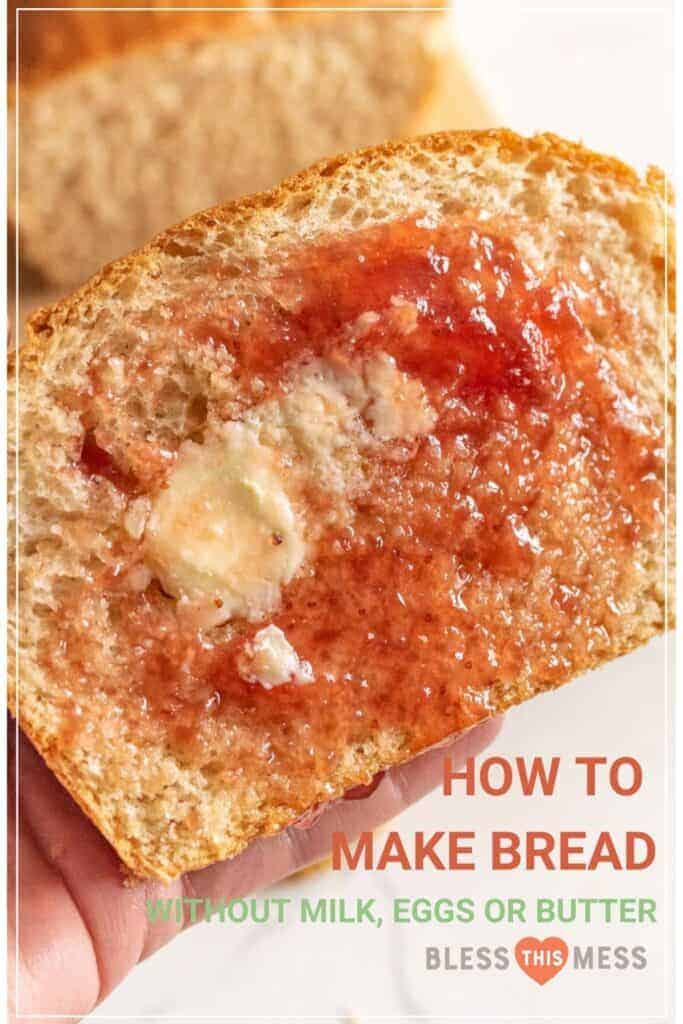
I love to make this and serve it warm with butter and jam for breakfast, as sandwich bread for lunch, or to make grilled cheese for supper (with some soup to dip, of course)!
It also pairs well with these homemade options:
Storage and Reheating
Room Temperature
Once fully cooled, store the bread in an airtight container or bread box for up to 5 days. Do not use the refrigerator as it will dry out the bread.
Freezer
Slice the bread before freezing so that you can pull one slice out at a time. Once sliced, wrap in plastic wrap and place into a freezer-safe storage bag. Let it come to room temperature before serving.
More Yeast Bread Recipes to Consider
Simple Gingerbread Recipes
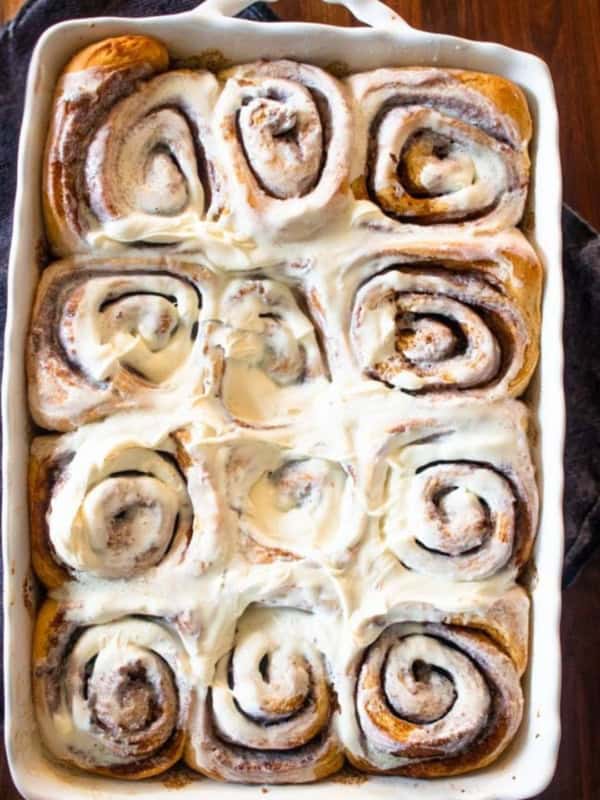
Gingerbread Cinnamon Rolls

Yeast Bread Recipes
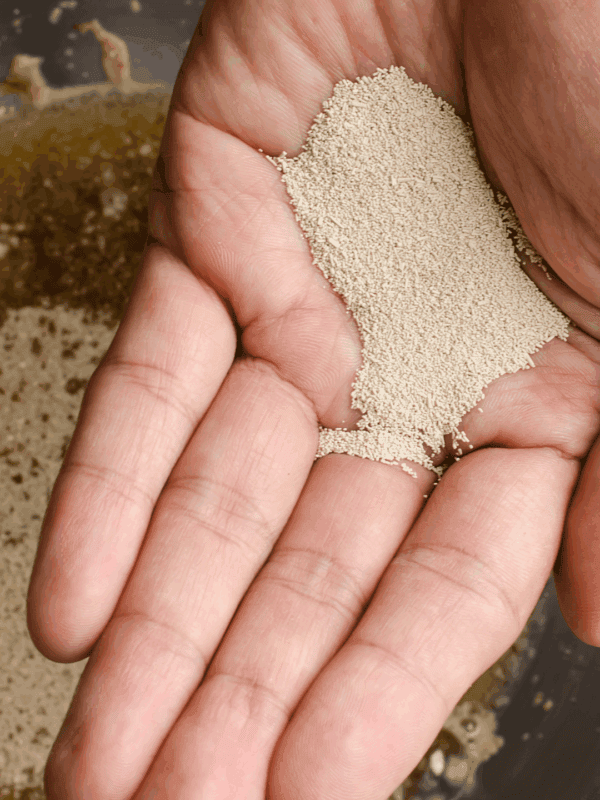
Instant Yeast vs Active Dry Yeast — Quick Baker’s Lesson

Yeast Bread Recipes
Garlic & Parmesan Italian Breadsticks {Twisted Breadsticks}
Some of my favorite kitchen memories are simply standing around the counter waiting for the first slice of bread to cool enough to add the butter. This recipe isn’t about being a professional baker; it’s about the comfort of a home-cooked meal and sharing it with others. This bread without eggs is a testament to how simple ingredients can truly create something special.
Did you make this recipe? Leave a ⭐️ review and share it on Instagram, Facebook, or Pinterest!







I am thinking about adding diced peaches to this recipe, but I would need to adjust the total liquid for that to work, wouldn’t I? (We’ve been snowed in for 16 days and counting, I’m going a little stir crazy).
I haven’t done a lot of add-ins to this recipe. I generally do the opposite though, I’ll add what I want then adjust the flour to get a workable dough though your options seems right too! 16 days is a realllllly long time, need me to come dig you out?
Amazing! I’m so surprised it’s this good
Made it. It tasted wonderful, straight from the oven with butter snd honey! What is the best way to reheat it? Thanks for sharing the recipe!!!!!
I tend to microwave or toast one slice at a time to reheat! So glad you liked it Christy!